

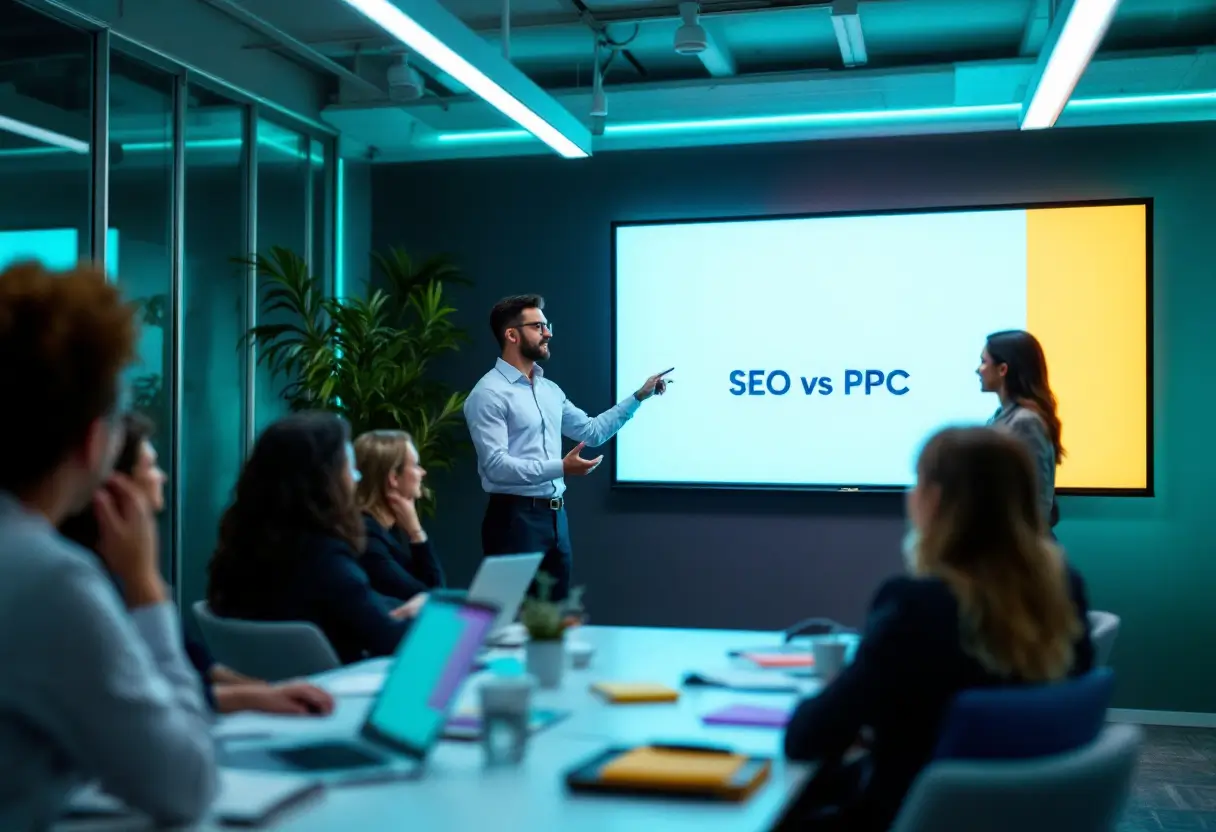
Ask ten businesses whether SEO or PPC is better and you’ll likely get ten different answers. Some swear by , others are fully committed to . And often, they’re managed in completely separate silos with no crossover at all. But here’s the thing: viewing SEO and PPC as rival channels is one of the most common and expensive mistakes a business can make.
Rather than being opposing forces, SEO and PPC are best used to support and amplify one another. Understanding the differences between them is essential, but so is knowing when they should work together. Smart marketing doesn’t rely on one channel—it finds the right balance based on goals, budget, and market conditions. And when that balance is right, you make every click and every penny count.
Here, our takes a look at what separates SEO from paid search, how they complement each other, and why needs to be built with both in mind right from the beginning.
What is the Difference Between SEO and PPC?
First, a refresher.
SEO (Search Engine Optimisation) is all about helping your website show up naturally in search results without paying for every visit. It goes beyond just keywords, covering everything from site structure and speed to the quality of your content and the reputation of your domain. Whether it’s fixing technical issues behind the scenes or creating useful content that answers real questions, SEO is designed to attract the right visitors organically and keep them coming back.
PPC (Pay-Per-Click) or paid search involves placing ads on platforms like Google Ads. You choose your keywords, write your ad, and bid for the top spot. Every time someone clicks, you pay. It’s fast, measurable, and highly targeted.
| SEO | PPC (Paid Search) | |
| Cost Structure | No direct cost per click | Pay per click |
| Speed | Long-term results | Immediate visibility |
| Trust Factor | Perceived as more trustworthy | Can be skipped or blocked |
| Longevity | Builds lasting presence | Traffic stops when spend does |
| Data Feedback | Slower, more cumulative | Fast, detailed, trackable |
While the differences between SEO and PPC are clear on paper, the mistake many businesses make is assuming they should be treated entirely separately.
The Misguided ‘Either/Or’ Mentality
Too often, businesses pit SEO vs PPC as if they’re competing for attention and budget.
This is the wrong mindset.
SEO and PPC perform best when they’re aligned. The decision to invest more in one than the other should always be based on business goals, timing, market competition, and budget—not loyalty to a particular tactic.
For example, if you’re launching a new product and need traffic fast, PPC gives you the speed to start generating leads while your SEO strategy builds authority in the background. Conversely, if you’re in a sector where cost-per-click can top £20, SEO becomes a strategic way to reduce long-term acquisition costs by owning those high-value terms organically.
That said, competitive keywords aren’t easy to rank for, especially if you’re working with a new domain or operating in an industry full of established players. In these cases, PPC can help keep the pipeline full while your SEO presence catches up.
Communication is Key When SEO and PPC Are Handled Separately
It’s not uncommon for SEO and PPC to be managed by different agencies, departments, or individuals. That’s not necessarily a problem—as long as they talk to each other. When these functions operate in isolation, businesses miss opportunities for shared insight, and risk making decisions in one area that negatively affect the other.
Take a significant increase in paid search spend. This could result in a spike in branded search traffic, which may look like organic growth at a glance. On the flip side, users might see the ad and choose to click an organic result instead, slightly reducing paid CTR. If teams aren’t communicating, these shifts can be misinterpreted, leading to poor decisions.
Shared reporting, keyword planning, and performance reviews help SEO and PPC campaigns work together instead of competing for credit. Collaboration leads to better decisions and a more efficient use of budget.
How SEO and PPC Can Strengthen Each Other
When you let PPC and SEO inform each other, both become more effective.
- Keyword and intent data from PPC can help shape SEO priorities by revealing what users are actually searching for—and what converts.
- Ad copy testing gives you a fast way to find messaging that resonates. Use that insight to craft meta descriptions, landing page headings, and blog titles.
- Dual visibility—showing up in both paid and organic listings for the same search—builds brand recognition and trust. Users are more likely to click when they see you more than once.
Even if you’re only running PPC temporarily, using it to test ideas, build remarketing audiences, or inform content planning can set your SEO strategy up for long-term success.
Where Web Design Fits Into the PPC vs. SEO Debate
Whether your traffic comes from organic or paid search, the user experience when they land on your site makes or breaks the outcome. A beautiful but poorly structured site will struggle to rank and convert. Likewise, a page with strong SEO content but clunky UX will lose leads fast.
That’s why web design must be built with both from the outset.
Let’s take Page Experience as an example. If a visitor clicks through from a Google Ad but lands on a page that’s slow to load or confusing to navigate, chances are they’ll bounce before taking any action. Google notices this and will penalise the landing page with a lower Quality Score, driving up your CPC.
On the SEO side, Google’s Page Experience signals—while currently more of a tie-breaker than a major ranking factor—still impact your ability to hold strong positions over time. Search engines reward usability and penalise poor mobile responsiveness, intrusive layouts, or unclear navigation.
Here are some common design issues that hurt both SEO and PPC:
- Slow load times and bloated assets
- Unclear or weak calls to action
- Poor mobile responsiveness
- Confusing site architecture
- Inconsistent branding or tone
Getting your SEO web design right the first time saves time, money, and headaches down the line. Retrofitting SEO and PPC requirements onto an existing design is inefficient and rarely delivers the same results.
At YOP, we design with search performance in mind from day one. That means thinking about keyword targeting, crawlability, landing page flexibility, ad creative formats, and technical SEO elements during the initial design phase—not after the site goes live.
The Importance of High-Quality Website Content
Your site content is where SEO and PPC truly overlap.
For SEO, high-quality content improves your chances of ranking and keeping users engaged. For PPC, it enhances ad relevance, increases landing page Quality Score, and improves your conversion rate.
The aim is the same for both: get the user to act. But the way you write matters. It must speak to intent, solve problems, and guide the visitor toward a clear next step. Generic, thin, or confusing copy leads to high bounce rates and low return on ad spend.
At YOP, our in-house content team works alongside our PPC and SEO specialists to make sure every landing page, blog, and product description is doing the right job. That joined-up approach helps unify tone, streamline messaging, and turn traffic into tangible results.
Budget Planning: How to Allocate Spend Between SEO and PPC
How you split your budget between SEO and PPC depends on your goals, timeline, and how competitive your market is. If you’re looking for quick wins like leads through the door, product visibility, or a fast campaign launch, PPC is likely to take the lead. It’s ideal for testing ideas, gauging demand, and making real-time adjustments.
SEO, on the other hand, builds value over time. It requires an upfront commitment and a longer runway before results start showing. For sustainable growth and reduced cost per acquisition in the long term, SEO deserves consistent investment, even if the early returns are slower.
In many cases, a 60/40 or 70/30 split between PPC and SEO is common at launch, shifting over time as your organic traffic builds. If your PPC spend is high due to expensive CPCs, investing in SEO for those terms can lower costs in the long run.
Regular reviews are essential. Monitor which channels are delivering leads at the best cost, and adjust accordingly. Set a clear testing period (e.g. 3 months), track performance by campaign or landing page, and reallocate spend based on real data. Flexibility is key, as market conditions, competition, and demand can all shift, so your budget strategy should, too.
Tracking Success: Shared Metrics That Matter
Understanding how your SEO and PPC channels are performing individually is important, but tracking them together reveals far more about what’s really driving results.
Key metrics like cost per lead (CPL), conversion rate, and revenue per visitor should be viewed across both channels. For PPC, this data is available in Google Ads. For SEO, you’ll need to combine Google Search Console and GA4 to track organic conversions and metrics accurately. Make sure your goals and events are clearly defined and consistent across platforms.
Assisted conversions are particularly important. These occur when a user clicks a paid ad, leaves, then returns via organic search to convert – or vice versa. Attribution modelling in GA4 or other analytics tools like Looker Studio can reveal how your channels support one another throughout the buyer journey.
Other shared KPIs worth watching include bounce rate, average session duration, and landing page performance. If one channel has a significantly lower conversion rate on a page, it could signal a misalignment between user intent and content.
Bringing SEO and PPC metrics together into one dashboard gives you a clearer picture of total performance and helps justify spend with real-world impact.
Why You Should Blend SEO and PPC for Bottom Line Results
There are clear differences between SEO and PPC, but they shouldn’t be treated as disconnected strategies. In fact, one of the most powerful moves a business can make is to stop viewing them in isolation and start planning for both as part of a single, evolving digital strategy.
Use PPC to move fast, gather insight, and stay visible in competitive spaces. Use SEO to build lasting visibility, reduce acquisition costs over time, and strengthen brand authority. And wherever possible, let them inform and support each other.
From product launches to market expansion, YOP is built to support it. Our team covers everything from high-performance websites to targeted search campaigns and content that converts—all aligned from the start to save time, avoid rework, and maximise results. Looking for a digital agency that understands the full picture? Get in touch with YOP and let’s get the ball rolling on something that works.